9 Warning Signs Your Injury May Spiral Without Kinesio Taping
When a Small Knee Issue Starts Interrupting Daily Movement
You keep thinking the soreness will settle in a few days. Yet every morning, the knee still feels stiff. Stairs suddenly feel awkward. Your workouts get shorter. Even sitting too long makes movement uncomfortable again. This is often when people start searching for Kinesio Taping after repeated setbacks make daily movement unpredictable.
What catches many people off guard is how fast a “small” injury can interfere with normal life. A knee that once hurt only after sports may now ache during walks, work shifts, or simple household tasks. Swelling may disappear for a while, then return after activity. Over time, repeated flare-ups can change how you move without you noticing.
Why Some Injuries Quietly Get Worse Over Time
Many injuries do not suddenly become severe overnight. Instead, they build slowly through repeated strain, altered movement, and constant irritation.
A knee that feels unstable may cause you to shift weight onto the opposite leg. Tightness in one area can force nearby muscles to work harder. Eventually, the body adapts to discomfort instead of moving normally.
Common issues that can gradually build include:
delayed recovery after activity
swelling that repeatedly returns
stiffness after sitting or resting
weakness during stairs or squats
unstable movement patterns
Reduced confidence during walking or sports
This is common among active adults trying to “push through” discomfort while continuing work, gym routines, or recreational sports.
At first, symptoms may seem manageable. Over time, repeated compensation strains nearby joints and muscles.
What Makes Kinesio Taping So Common After Sports and Joint Injuries
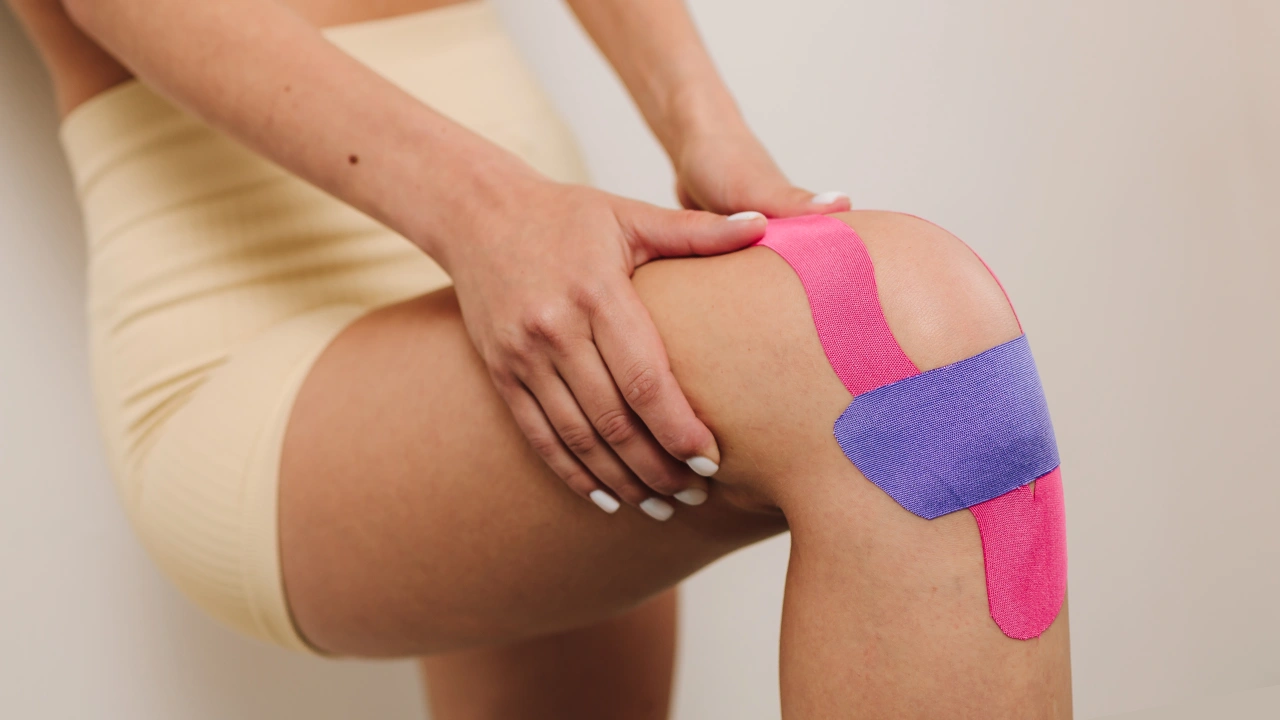
Kinesio Taping is commonly used in physiotherapy to support movement during recovery from muscle and joint strain.
The tape is applied in specific patterns to improve movement awareness and support areas under stress. Many people seek kinesio taping for knee injuries when the knee feels unstable during movement or activity.
For some individuals, kinesio taping for knee support may help during walking, training, stairs, or sports participation. Others use kinesio taping strategies for knee pain when repetitive movement keeps irritating the joint.
In physiotherapy settings, taping is often combined with:
movement retraining
strengthening work
mobility exercises
muscle activation drills
activity modification
For athletes and active adults, kinesio taping for sports knee injuries is frequently used during recovery phases where movement still feels uncertain.
Some people also explore kinesio taping for swollen knees when recurring inflammation continues to limit activity.
9 Warning Signs Your Injury May Spiral Without Kinesio Taping
1. Swelling Keeps Returning
The swelling improves for a few days, then suddenly returns after activity. This often signals that the area is still struggling to tolerate movement demands.
2. Your Knee Feels Unstable During Walking
A knee that feels like it may “give out” can create fear during stairs, quick turns, or uneven ground.
3. Pain Gets Worse After Exercise
You finish a workout feeling fine, only to notice increasing soreness hours later or the next morning.
4. Stiffness Appears After Rest
Sitting through work meetings, long drives, or evenings on the couch may leave the joint feeling locked up when standing again.
5. You Start Avoiding Certain Movements
Many people quietly stop squatting, kneeling, running, or climbing stairs because movement no longer feels trustworthy.
6. Sports Strain Keeps Coming Back
Recurring strain during sports may indicate that the body is still compensating for weakness or instability.
7. One Side of the Body Starts Working Harder
You may begin shifting weight away from the painful side without realizing it. Over time, this can irritate nearby muscles and joints.
8. Daily Tasks Feel More Frustrating
Simple activities like grocery shopping, carrying items, or getting out of bed can become harder over time.
9. You Feel Nervous About Movement
One overlooked warning sign is fear itself. When people stop trusting movement, activity levels often drop quickly.
Why Ignoring These Signs Can Create Bigger Problems Later
When movement problems remain unaddressed, the body often adapts in unhealthy ways.
A painful knee can change how the hips move. Tight muscles may force the lower back to absorb extra strain. Reduced activity gradually weakens muscles that normally support stability.
Over time, this can lead to:
recurring flare-ups
decreased mobility
reduced physical activity
frustration during exercise
lower confidence during movement
Ongoing joint irritation
For many adults, the emotional side becomes just as difficult as the physical side. Activities that once felt normal are now causing hesitation and frustration.
How Physiotherapy Approaches Injury Support and Movement Recovery
Physiotherapy focuses on identifying why movement feels restricted or unstable, rather than only addressing symptoms.
Movement Assessment
A physiotherapist evaluates walking patterns, strength, joint motion, balance, and movement control to identify contributing factors.
Exercise Progression
Recovery exercises are gradually progressed based on movement tolerance and physical demands.
Mobility Work
Tight muscles and restricted joints can affect movement quality. Mobility-focused work may help restore smoother motion.
Muscle Control Training
Weak or delayed muscle activation may increase joint stress during activity.
Kinesio Taping Support Strategies
Kinesio Taping is used alongside exercise programs to assist movement awareness and joint support during recovery.
Client Centred Treatment Approaches
Recovery plans are adjusted around work demands, activity levels, sports participation, and daily movement needs.
Individualized Assessment and Treatment Methods
Each injury responds differently depending on strength, movement habits, activity levels, and recovery history.
Mistakes That Often Make Injury Recovery Harder
Waiting Too Long Before Assessment
Many people ignore symptoms until movement becomes significantly restricted.
Returning to Sports Too Quickly
Jumping back into intense activity before movement stabilizes may increase the risk of recurring strain.
Ignoring Swelling
Persistent swelling can signal ongoing irritation that should not be dismissed.
Pushing Through Unstable Movement
Continuing activity while the joint feels unreliable may place extra stress on surrounding structures.
Relying Only on Rest
Rest alone may not address weakness, mobility loss, or poor movement mechanics.
Self-Diagnosing Online
Online advice may not match the actual cause of your movement problem.
Injury Concerns for Active Adults in Edmonton
Active lifestyles in Edmonton often place heavy demands on the body year-round.
Winter conditions can increase slips and awkward movement patterns. Gym activities, recreational hockey, running, and physically demanding jobs may repeatedly stress knees and joints.
Many adults work through discomfort because schedules stay busy. Repeated strain combined with reduced recovery time slowly worsens movement problems.
That is why recurring swelling, instability, or stiffness should not be ignored for months.
FAQs
Can Kinesio Taping help knee instability?
Kinesio Taping may assist movement awareness and support during activity when combined with physiotherapy exercises and movement retraining.
How long can sports injuries take to settle?
Recovery timelines vary depending on injury type, activity demands, and the timing of movement interventions.
Does Kinesio Taping help with swelling?
Some physiotherapy approaches use kinesio taping for swollen knee concerns alongside exercise and activity modification strategies.
Should I continue exercising with knee discomfort?
Light movement may be appropriate in some cases, but worsening pain, instability, or swelling should be assessed.
When should I see a physiotherapist after an injury?
If symptoms continue to recur, movement feels unstable, or activity becomes difficult, an assessment may help identify contributing factors.
Can recurring strain become harder to manage over time?
Yes. Repeated strain and compensation patterns may gradually increase stress on nearby muscles and joints.
Moving Forward
Ignoring recurring stiffness, swelling, or unstable movement can affect far more than sports performance. Over time, even small injuries may interfere with sleep, walking, workouts, work demands, and daily confidence during movement.
Early physiotherapy assessment can help identify movement problems before compensation patterns and recurring flare-ups become harder to manage. If knee discomfort or instability keeps returning, visiting Prime Health Physiotherapy at 9228 144 Ave NW #11, Edmonton, AB T5E 6C6, Canada can help you take the next step toward safer movement and physical recovery.