Impingement Syndrome
Impingement Syndrome Care
Impingement Syndrome can make everyday movements like lifting your arm, reaching overhead, or even sleeping uncomfortable and frustrating. At Prime Health Physiotherapy, we focus on practical, evidence-based methods to address the root cause of your symptoms and help restore natural movement patterns.
This condition is often seen in the shoulder, but can also affect other joints where soft tissues become compressed during motion. With the right approach, many people notice steady progress in mobility, strength, and overall function.
What Is Impingement Syndrome?
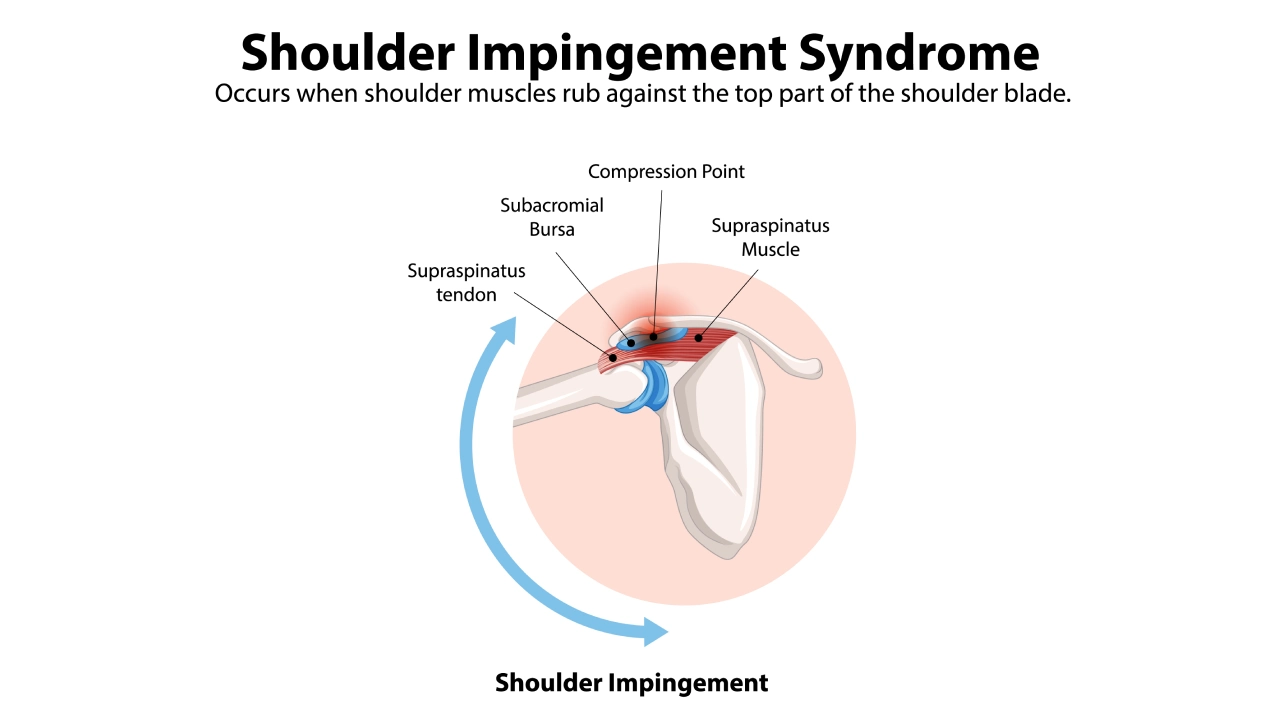
Impingement Syndrome occurs when tendons or soft tissues become compressed between bones during movement. In the shoulder, this typically involves the rotator cuff tendons being pinched between the upper arm bone and the acromion.
Common Causes
- Repetitive overhead activities (sports or work-related)
- Poor posture, especially rounded shoulders
- Muscle imbalances or weakness
- Previous injuries that altered joint mechanics
- Age-related changes in joint structures
Over time, this compression can lead to irritation, reduced mobility, and difficulty performing routine tasks.
Signs and Symptoms of Impingement Syndrome
Recognizing the early signs can help prevent the condition from progressing.
Typical Symptoms Include:
- Pain when lifting the arm overhead
- Discomfort while reaching behind the back
- Weakness in the shoulder or affected joint
- Pain that worsens at night, especially when lying on one side
- Limited range of motion
If left unaddressed, these symptoms can begin to interfere with work, exercise, and daily routines.
How Impingement Syndrome Is Assessed
At Prime Health Physiotherapy, the assessment process focuses on identifying the underlying factors contributing to your condition.
What to Expect:
- Review of your medical history and activity level
- Movement analysis to observe joint mechanics
- Strength and flexibility testing
- Postural evaluation
This detailed evaluation helps determine whether the issue stems from muscle imbalance, joint restriction, or movement habits.
Impingement Syndrome Treatment Approach
Managing Impingement Syndrome requires a structured plan that focuses on restoring proper movement while reducing stress on affected tissues.
Key Components of Care
1. Movement Correction
Improving how your body moves during daily tasks helps reduce repeated strain on the joint.
2. Strength Development
Targeted exercises focus on stabilizing muscles, particularly around the shoulder blade and rotator cuff.
3. Mobility Work
Gentle techniques help improve flexibility in tight muscles and surrounding tissues.
4. Postural Training
Addressing posture plays a major role, especially for individuals who spend long hours sitting or working at a desk.
5. Activity Modification
Temporary adjustments to your routine can prevent further irritation while recovery progresses.
Each step is adjusted based on how your body responds, ensuring steady and safe progress.
Benefits of Early Physiotherapy for Impingement Syndrome
Starting physiotherapy early can make a significant difference in how quickly and effectively symptoms improve.
Why Early Care Matters
- Reduces strain on affected tissues
- Improves joint function and coordination
- Helps prevent further complications
- Supports gradual return to normal activities
Ignoring early symptoms can lead to more persistent discomfort and longer recovery timelines.
Preventing Impingement Syndrome
Prevention focuses on maintaining balanced strength and proper movement patterns.
Practical Prevention Tips
- Maintain an upright posture during sitting and standing.
- Strengthen shoulder and upper back muscles regularly.
- Avoid repetitive overhead strain without proper conditioning.
- Take breaks during prolonged activities.
- Warm up before physical activity.
Small, consistent habits can help reduce the likelihood of recurrence.
Who Can Benefit from Treatment?
Impingement Syndrome can affect a wide range of individuals.
Common Groups Include:
- Office workers with prolonged sitting habits
- Athletes involved in overhead sports
- Manual labourers
- Individuals recovering from shoulder injuries
No matter your activity level, addressing the issue early can help maintain your daily routine without interruption.
Book an Appointment
If shoulder or joint discomfort is limiting your movement, it may be time to take action. At Prime Health Physiotherapy, we focus on identifying the cause of your symptoms and guiding you through a structured recovery plan.
Contact us today to schedule your assessment and start moving with confidence. Your path toward better mobility begins now.
Frequently Asked Question (FAQ)
You may need to limit repetitive overhead movements, heavy lifting, and activities that trigger discomfort. Adjustments are usually temporary and depend on your progress.
Recovery time varies depending on severity, activity level, and consistency with exercises. Many individuals notice improvement within a few weeks, while others may take longer.
In some cases, mild symptoms may settle with rest. However, without addressing the underlying cause, symptoms can return or worsen over time.
Yes, but it should be guided and structured. Specific exercises can support recovery when performed correctly and at the right stage.
If pain persists for more than a few days, limits movement, or interferes with daily tasks, it’s a good idea to get it assessed.